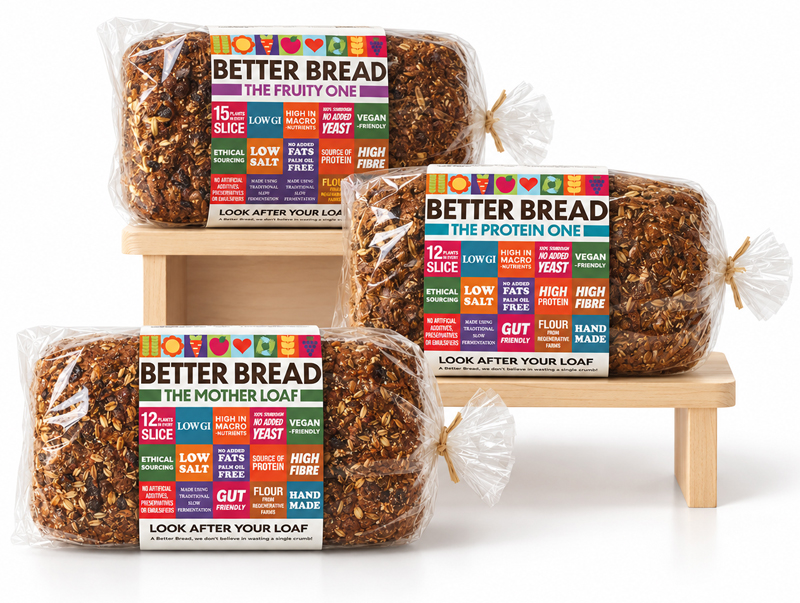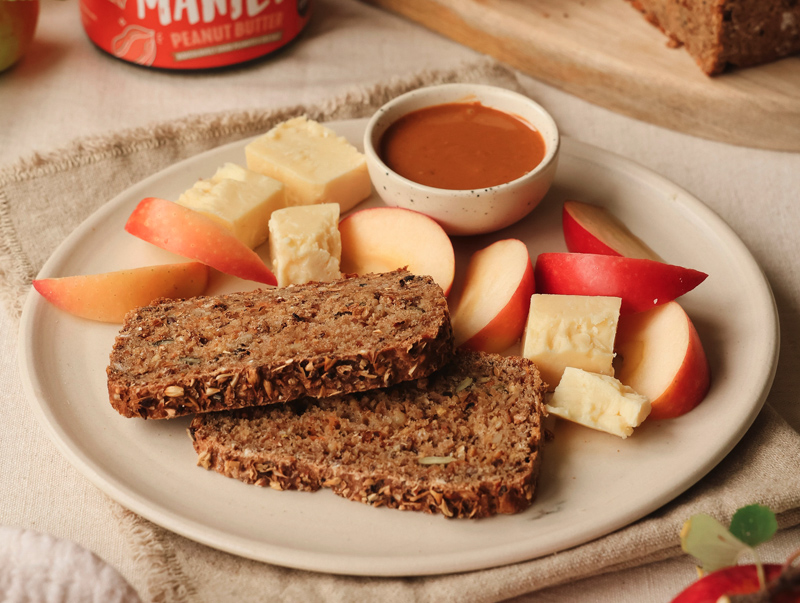
Meet the team with a mission: to change the way the UK thinks about bread
People ask us this a lot, usually with a slightly concerned expression. Why would three people with busy working lives decide to start a bakery? It is a fair question. Here is the honest answer, or rather the three honest answers, because there was never just one reason.
Why did we start baking in the first place?
Because we could not buy the bread we wanted to eat.
Like a lot of families, we had been trying to eat better: less ultra-processed food, more fibre, more things made from ingredients we recognised. It is a simple enough principle until you get to the bread aisle, where almost everything is soft, slightly sweet, and made to last a fortnight. Even most bakery bread leans the same way, because that is what people have come to expect bread to be.
So, like half the country, we started baking at home during lockdown. Unlike half the country, we did not stop. The recipe kept changing. Rye went in, then seeds, then a second starter, then grated carrot and apple, and eventually whole grain crystal barley malt, which was the point at which it stopped being a nice loaf and became something we were properly proud of.
How does a kitchen recipe become a business?
Slowly, and then rather quickly.
Everyone who tried it came back for more. Friends asked for loaves. Our teenagers stopped complaining about this healthy alternative to brioche and started asking when the next loaf was coming. At some point a throwaway comment about wanting to start a bread brand turned into a spreadsheet, and the spreadsheet turned into a plan.
The original plan was to hire a professional baker to make the recipe at scale. Then Sedge said he would do it himself. That turned out to be the best decision we made, because a man who has been a geophysicist, a farmer, a special educational needs teacher and the founder of an award-winning charcuterie business does not do anything by halves. He took a recipe that worked in a home oven and spent months turning it into one that works properly in a bakery, without losing anything that made it worth eating.
Vhari came in because she knows food marketing better than anyone we know. She runs The Food Marketing Experts, and she is the reason Better Bread has a route to your kitchen rather than just being very good bread that nobody has heard of.
Why does it matter to us how the business is run?
This is the second reason, and for us it is as important as the bread.
Annabel has spent twenty-five years running kdm Communications, a scientific marketing agency where people join and then (mostly!) do not leave. That is not an accident. It comes from a stubborn belief that if you look after people properly, the work looks after itself. We wanted to build Better Bread the same way from the first day, rather than promising to be a good employer once we could afford it.
That is why we are building the business with an open employment policy, starting with adults with learning disabilities. This is something that Sedge knows well from his years teaching, and it is something that really matters to all three of us. The plan is real work, not token work: learning our production process, developing toppings, trialling flavours for our seasonal specials, and helping at our pop-ups, with a proper apprenticeship scheme to follow as we grow. We are in conversation with a local organisation about how to do it well, and we will tell you more when it is agreed.
Beyond that, we are working towards giving 1% of our revenue to environmental causes through 1% for the Planet, and we have an ambition to become a certified B Corp. Neither of those is done yet. We are telling you now so that you can ask us how we are getting on.
What are we actually trying to do?
The third reason is the simplest. We think most people in the UK have never really been offered a choice about their bread. Not because anyone has been fooled, but because the alternative has not been on the shelf.
We want to change that. Not by telling anyone what to eat, but by making a loaf that is genuinely good for you and genuinely delicious, telling you exactly what is in it and how it is made, and letting the bread do the rest. We feel that it’s time to change the way people think about bread, and by offering an alternative, we hope to make a difference.
We have put our own money into this. We have signed a lease on a unit in Huntingdon, bought an oven that cost way more than our first car, and spent more evenings than we would like to admit talking about starter cultures. It is early days, and we will get things wrong. When we do, we will tell you, and we will tell you what we are changing.
If you would like to be part of it, the discovery box is the best place to start.
Frequently asked questions
Is Better Bread a family business?
Largely, yes. Annabel and Sedge are married, our teenagers are involved as taste-testers and occasionally as extremely honest critics, and Vhari is the third founder. It is small, it is personal, and we like it that way.
Where is the bread made?
In our own unit in Huntingdon, Cambridgeshire. If you live nearby, you can collect from us directly.
Who actually bakes it?
Sedge. Every loaf, at least for now until we need more hands on deck.
Why rye?
Because it is denser, more filling and more flavourful than wheat alone, and it works beautifully with a long sourdough ferment. We have written a whole post on the difference between sourdough and rye if you would like the detail.